

The Archive
The Dorow Collection is organized as an archive rather than a retail collection. Specimens are grouped according to scale, formation, and material presence, and are held as records of geological processes rather than as decorative objects.
The archive is not exhaustive, nor is it static. It reflects ongoing observation and long-term stewardship.
Giants Collection
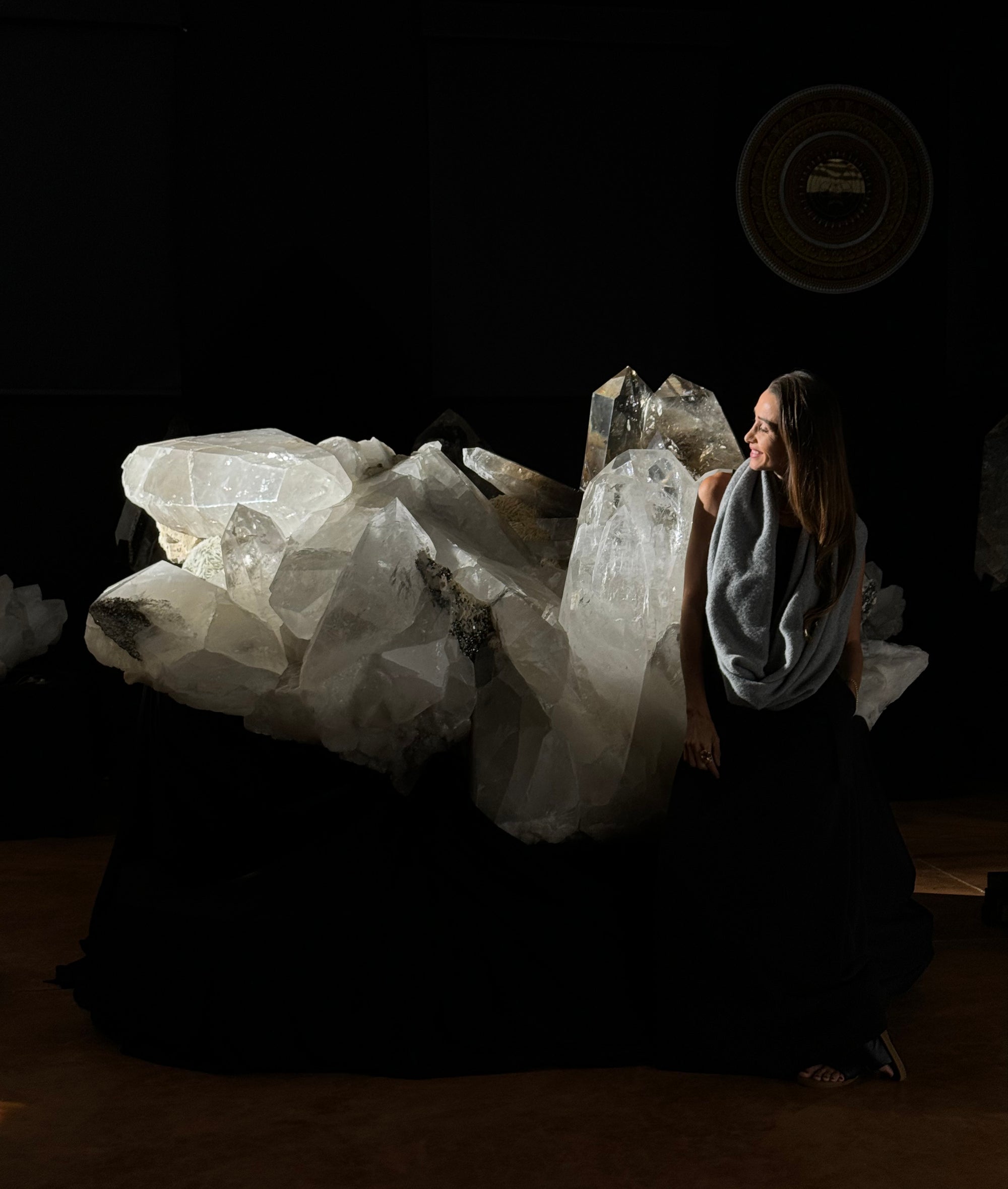
The Giants Collection
The Giants group consists of quartz specimens of exceptional scale, assembled for their material presence and structural clarity rather than rarity alone.
These works include large-format clear quartz clusters, points, and spheres, as well as specimens of smoky, morion, and elestial quartz. Their significance lies in mass, proportion, and formation, offering a direct encounter with geological scale.
Some specimens in this group weigh several tons. Their presence alters spatial perception and requires intentional placement and consideration.
The Archive Selection
This grouping brings together a broad range of mineral specimens acquired from diverse geological regions.
Included are quartz points, clusters, and formations exhibiting a wide range of growth conditions and inclusions, alongside other rare mineral structures. The focus of this selection is not completeness, but variation — allowing differences in formation, internal structure, and surface expression to be observed.
Specimens are studied as material records rather than classified as objects of ornament or symbolism.


Display & Context
Specimens within the archive are presented with attention to stability, proportion, and spatial context.
Supports and display structures are selected to ensure safety and clarity of observation without permanently altering or fixing the material. Display decisions prioritize the physical requirements of each specimen and the conditions under which it can be most clearly observed.
Circulation
The majority of the archive is held as a permanent collection.
Select specimens circulate privately by inquiry. Availability is determined by context, scale, and alignment with the Collection’s long-term direction.